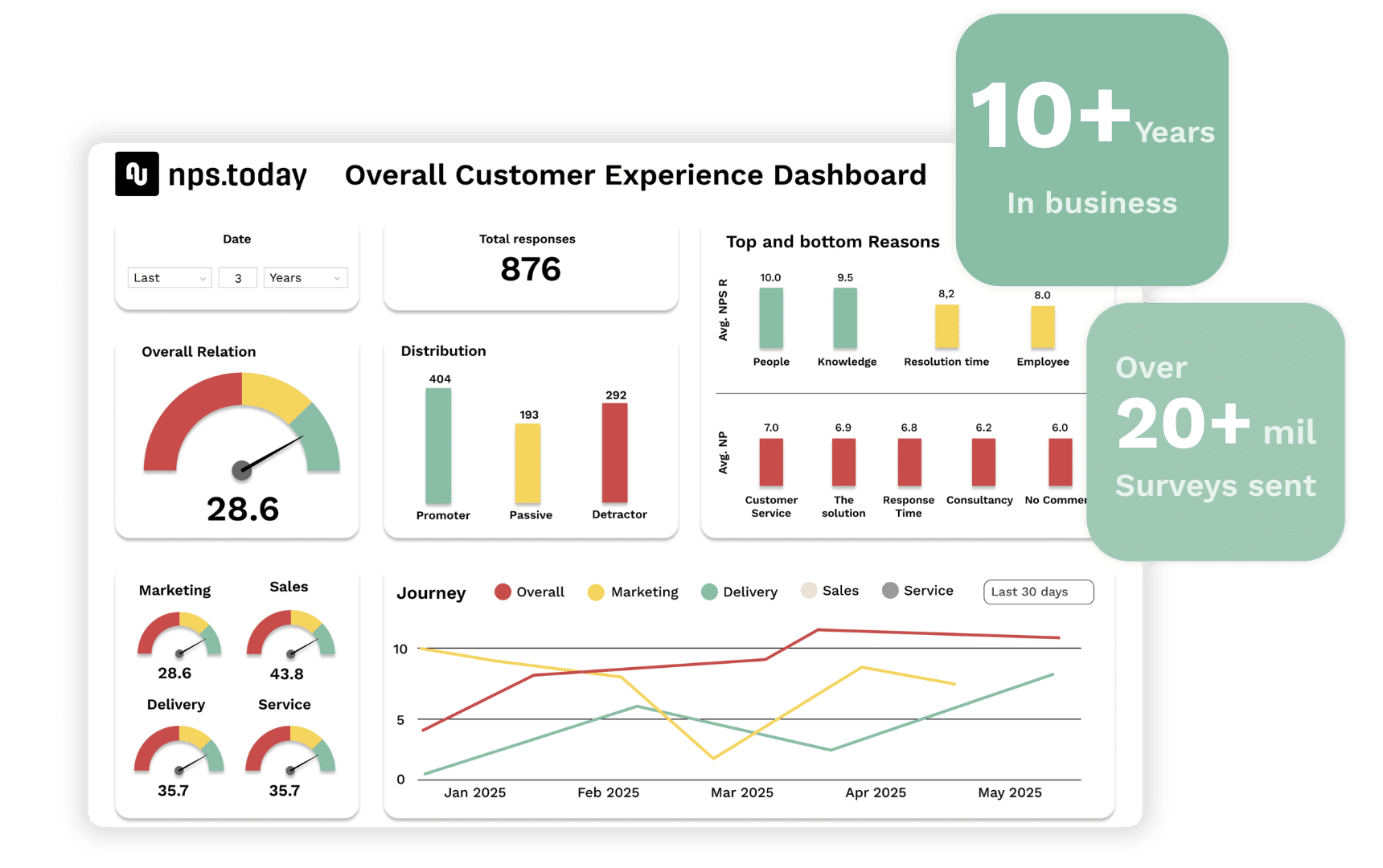
Taking NPS to a full CX program
What is NPS?
NPS, or Net Promoter Score, is the most powerful way to measure customer loyalty and drive business growth. At nps.today, we’ve turned NPS from a simple score into a full-blown customer experience concept — enabling you to measure, understand, and act on both customer experience and loyalty in a simple effective program.

The Research Behind the Method
The Method Backed by Millions of Real Customer Opinions
In the early 2000s, Fred Reichheld, together with Bain & Company, began one of the most ambitious studies of customer loyalty ever conducted. They analyzed thousands of customer survey formats and tracked the actual behavior of millions of customers across industries.
What they found was surprising:
Most traditional satisfaction surveys were long, complex, and disconnected from business results.
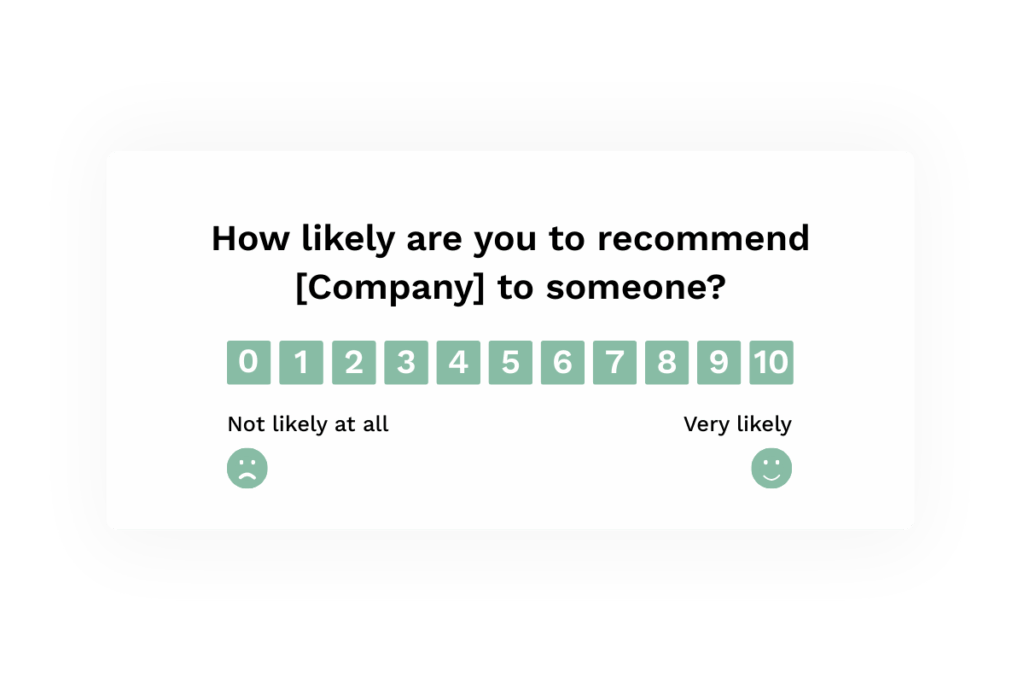
Only one simple question consistently predicted customer loyalty and future growth.
This insight led to the creation of the Net Promoter Score (NPS®) — a loyalty metric that has since become the global standard for understanding customer experience in a simple, actionable way.
Response categories
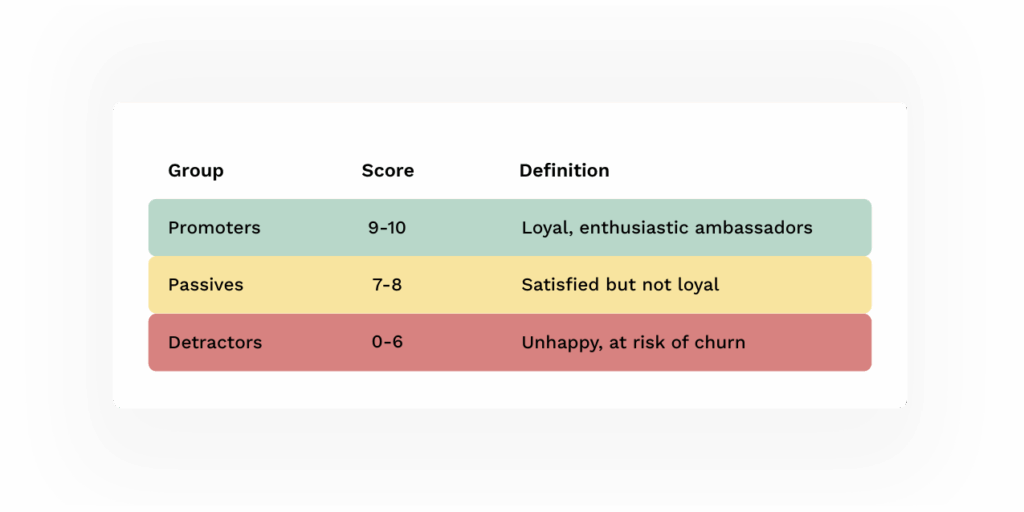
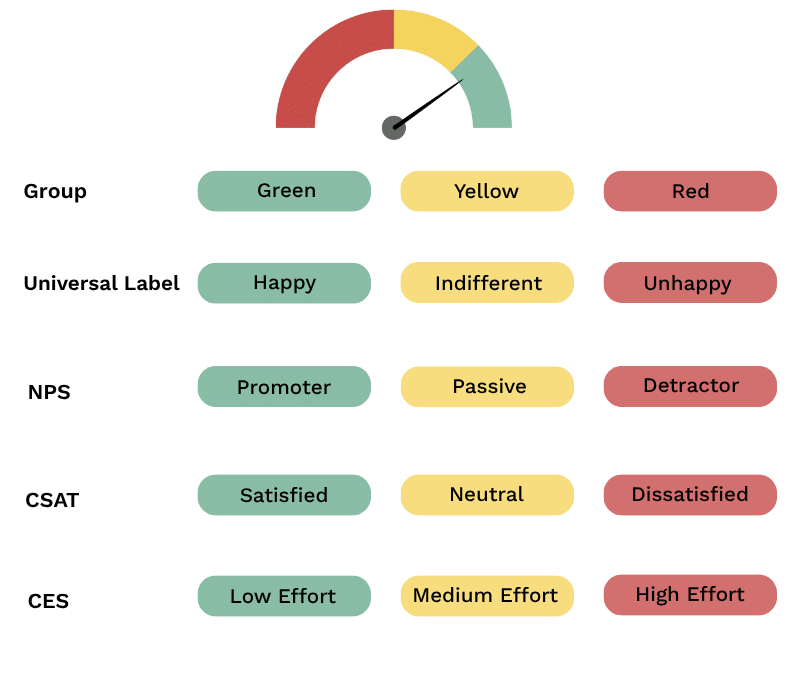
Customers respond on a scale from 0 to 10, and based on their rating, they fall into one of three groups.
All reporting and insights are based on red, yellow and green. Simple and something everybody clearly understand.
Why it works so well
First of all because it is relevant and based on an outside in approach letting the customers share what means most to them instead of the inside out approach asking multiple questions someone internally finds important.
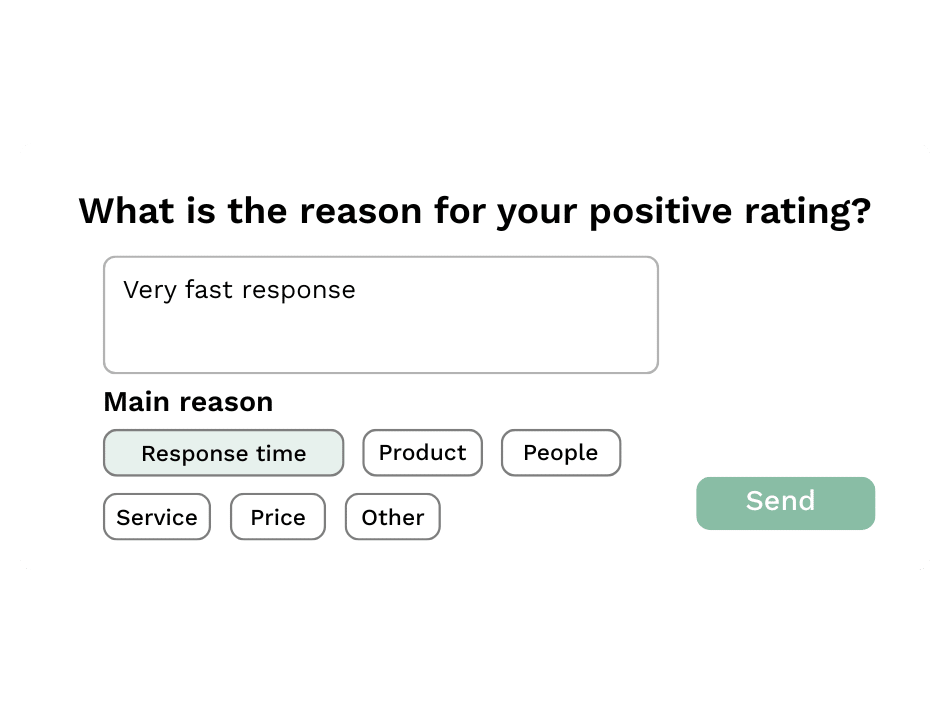
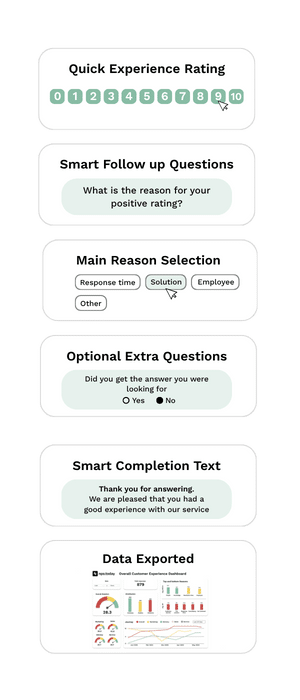
Secondly because it is so simple and clear and easy to respond to. Just a rating and a reason.
The respondent can share the reason in free text and/or by choosing a predefined main reason category.
Collecting both provides the best insights for 1:1 follow-up actions, where the texted reason serves as a great basis for discussions and the main reason provides trends and drivers for transformation decisions.
How to calculate the NPS Score?
NPS Formula:
NPS = (% Promoters – % Detractors) × 100
NPS = (67 – 33) × 100 = 33
Add numbers in the boxes in the calculator to test what it takes to get a great NPS score.
The common rule-of-tumb:
A score above 20 is good
NPS above 50 is excellent
NPS above 80 is extraordinary
Does NPS Only Work for Loyalty?
Definitely not. nps.today has turned the NPS method into a full-blown customer experience concept and built a plug & play platform to support the full closed loop across measure, understand and act.
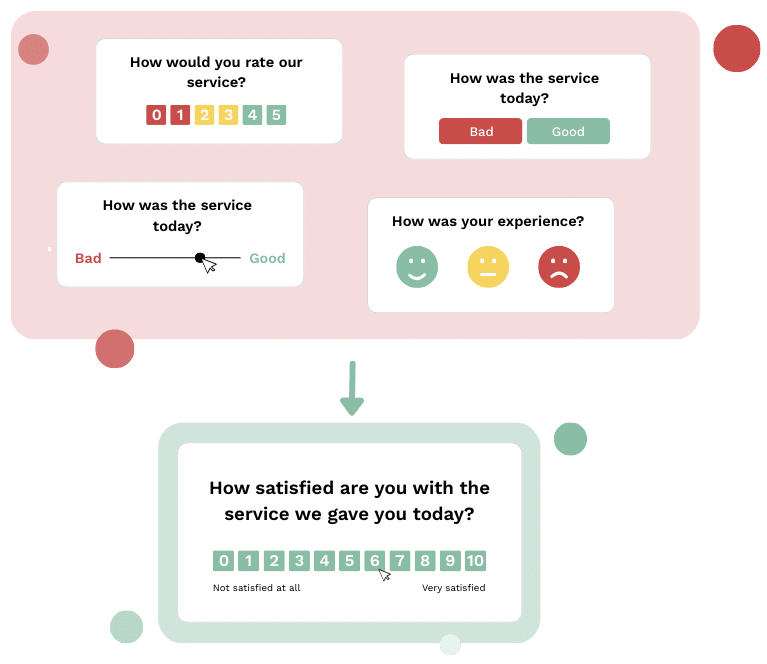
With a single scale approach to your survey strategy across NPS, CSAT and CES, you can measure loyalty, satisfaction and customer effort with the same survey and reporting format. You eliminate scale confusion, everybody understand what a 5-rating means, and you can start working with what we call the:
“ONE COMMON CUSTOMER PULSE”
Benefits of the 0 – 10 Scale
The 0–10 scale may seem simple, but its granularity makes it far more insightful than traditional 1–5 or smiley face surveys.
Here’s why:
- Greater visibility: You can detect small but meaningful shifts in satisfaction — e.g., a drop from 9 to 7, or growth from 6 to 8.
- More nuance: With 11 steps, you can differentiate levels of dissatisfaction and tailor recovery actions more precisely.
- Stronger analysis: Trends and improvements become clearer over time, helping you drive real change.
- One scale fits all: You can apply the same 0–10 scale to NPS, CSAT (Customer Satisfaction), and CES (Customer Effort Score), making data easy to compare and act on.
CSAT and CES can be color coded in precisely the same way making it simple and easy to harmonize your reporting
This approach creates the One Common Customer Pulse — a unified way of working with feedback across your entire business.
From NPS Score to System: The Power of nps.today
NPS is more than just a number. It’s a complete Net Promoter System that allows you to:
- Measure customer sentiment
- Understand root causes
- Act on feedback across the customer journey
At nps.today, we’ve taken this system and made it fully operational and automated — so you can focus on driving real improvements
How nps.today Uses NPS: rNPS and tNPS
We apply NPS in two powerful formats:
- Relational NPS (rNPS)
Track customer loyalty over time through recurring surveys — perfect for gauging the overall relationship.
- Transactional NPS (tNPS)
Collect feedback immediately after specific interactions — like support calls, deliveries, or purchases.
Combined, they give you a real-time, always-on view of the entire customer journey.
FAQ - Frequently Asked Questions
What does NPS stand for?
NPS stands for Net Promoter Score. It is a customer loyalty metric used to measure how likely customers are to recommend a company, product, or service to others.
What is NPS?
NPS, or Net Promoter Score, is a way to measure customer loyalty using one simple question: “How likely are you to recommend us to a friend or colleague?” The score helps businesses understand overall customer sentiment and loyalty.
How is NPS calculated?
NPS is calculated by subtracting the percentage of detractors from the percentage of promoters. Respondents who answer 9 or 10 are promoters, 7 or 8 are passives, and 0 to 6 are detractors. The final score ranges from -100 to 100.
What is the NPS scale?
The NPS scale runs from 0 to 10. Based on their answer, customers are grouped into three categories: detractors (0–6), passives (7–8), and promoters (9–10).
What is a good NPS score?
A good NPS score depends on the industry, but generally a score above 0 is considered positive, above 30 is strong, and above 50 is excellent. The most useful comparison is usually against your own past performance and industry benchmarks.
Why is NPS important?
NPS is important because it gives businesses a simple and effective way to measure customer loyalty. It can help identify strengths, uncover areas for improvement, and track whether customer experience efforts are working over time.
What is the difference between NPS and CSAT?
NPS measures long-term loyalty and willingness to recommend, while CSAT measures satisfaction with a specific interaction, product, or experience. Many companies use both metrics together to get a broader view of customer experience.
What is an NPS program?
An NPS program is the process of collecting, analyzing, and acting on Net Promoter Score feedback. It typically includes sending surveys, reviewing responses, following up with customers, and using insights to improve the customer experience.
How often should you send an NPS survey?
That depends on your business model and customer journey. Many companies send relationship NPS surveys quarterly or twice a year, while transactional NPS surveys are sent shortly after a specific customer interaction.
What does a negative NPS score mean?
A negative NPS score means you have more detractors than promoters. This can indicate issues with customer experience, product quality, or service, and it usually signals a need for deeper analysis and improvement.
Taking NPS to a full CX program
Turn your NPS score into a system for action
NPS is only valuable when your team can measure, understand and act on customer feedback. See how nps.today helps you move from simple Net Promoter Score surveys to an operational CX program with relational NPS, transactional NPS, one shared Customer Pulse and automated follow-up across the customer journey.
- Relational and transactional NPS across key customer touchpoints
- One 0–10 Customer Pulse for NPS, CSAT and CES surveys
- Root-cause insights, alerts and closed-loop follow-up workflows