
Close the loop
Turn customer feedback into action
Customer feedback is only valuable when your team can act on it.
With nps.today Close the Loop, you can follow up on customer feedback, document what happened and keep track of every action — from the first contact to resolution.
Give your team a simple, structured way to make sure important feedback is seen, followed up and acted on.


From feedback to follow-up - at scale
What does “Close the Loop” really mean?
Collecting an NPS, CSAT or CES response is only the first step. The next step is making sure the right person sees the feedback, follows up with the customer and records what happened.
A closed-loop customer feedback process helps your team:
- Respond to customer feedback while the experience is still fresh
- Make sure important responses reach the right people
- Record customer contact and actions taken
- Track whether a follow-up is open, contacted, closed or reopened
- Keep a complete history of what happened
- Turn individual feedback into insights that can improve the customer experience
Without a structured follow-up process, customer feedback can easily become another data point in a dashboard.
Close the Loop turns feedback into something your team can act on.
How it works
From customer feedback to follow-up
1. Collect feedback
Customers respond through your NPS, CSAT, CES or other surveys.
2. Identify what needs attention
Use ratings, comments, rules and notifications to identify feedback that requires follow-up.
3. Contact the customer
Give the right employee access to the response and customer feedback so they can follow up while the experience is still fresh.
4. Document the action
Add notes and record what happened directly on the response.
5. Close or reopen the follow-up
Mark the follow-up as Contacted, Closed or Reopened depending on the current status.
6. Learn from the feedback
Use the accumulated feedback and follow-up history to identify patterns, root causes and opportunities for improvement.


From manual work to smart decisions
Close the loop where your team already works
Following up on customer feedback should not require a separate workflow.
With nps.today, your team can access and follow up on feedback from the tools and channels they already use.
nps.today
Review customer responses, follow-up activity and history directly in the nps.today platform.
Email notifications
Receive notifications when feedback requires attention and open the response directly from the notification.
Feedback App
Give employees access to customer feedback and follow-up from the Feedback App.
Power BI
Bring customer feedback and follow-up data into your existing reporting and BI workflows.
The result: customer feedback becomes part of everyday work instead of something your team only reviews when looking at a CX dashboard.
Close the Loop inside your CRM and business systems
Get feedback to the right people
Not every customer response needs the same follow-up. Make sure important feedback reaches the people who can act on it.
- Automatically notify the right colleagues based on ratings, segments or rules
- Escalate critical feedback quickly
- Give employees the context they need to follow up
- Make ownership clear across teams
- Reduce the risk of important feedback being overlooked

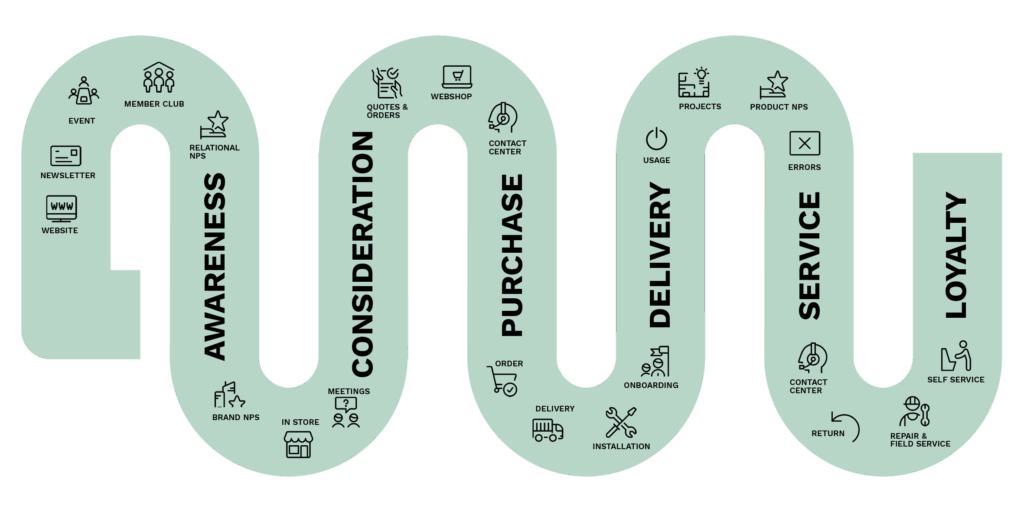
One platform. One method. Endless use cases.
Turn customer follow-up into CX insights
Closing the loop is not only about resolving individual customer issues. The follow-up data can also help your organization understand what is happening across the customer experience.
With nps.today, you can combine customer feedback, follow-up activity and CX analytics to:
- Identify recurring issues and root causes
- Discover trends across customers, teams and touchpoints
- Explore feedback with the AI Feedback Assistant
- Analyze customer feedback in interactive dashboards
- Identify opportunities for operational improvements
This connects individual customer conversations with the bigger picture — helping your organization move from reacting to feedback to continuously improving the customer experience.
Peter Tranberg Møller
FAQ - Frequently Asked Questions
What does it mean to close the loop on customer feedback?
Closing the loop means following up on customer feedback, documenting the action and ensuring that the issue is handled. The process begins when feedback is received and continues until the customer has been contacted, the relevant action has been completed and the outcome has been recorded. Its purpose is to turn customer feedback from data into action and organisational learning.
Why is it important to follow up on customer feedback?
Customer feedback creates real value only when it leads to a response or improvement. Follow-up can help an organisation resolve specific issues, understand the reason behind a score and demonstrate that the customer has been heard. Documented follow-up activities also provide valuable evidence for identifying recurring problems across the customer journey.
Does every customer response require personal follow-up?
No. Different responses require different levels of follow-up. Organisations can prioritise using the rating, customer comments, severity, customer segment and whether the customer requested contact. Critical issues and clear risk signals should normally receive priority. Positive responses may require only an acknowledgement, while recurring themes can be addressed through broader improvement initiatives.
How quickly should an organisation respond to negative feedback?
Follow-up should take place while the experience is still fresh, but the appropriate response time depends on the severity and the customer’s situation. Critical issues may require action on the same day, while less urgent feedback can follow a standard deadline. Organisations should define clear service levels, escalation rules and responsibilities for different categories of feedback.
Who should be responsible for closing the feedback loop?
The employee or team best placed to understand and resolve the issue should own the follow-up. This may be an account manager, customer service team, sales representative or operational manager. The CX team can design and monitor the process, but each follow-up should have a clearly identified owner who is accountable for the next action.
What should a good customer follow-up conversation include?
A good follow-up should acknowledge the customer’s experience, ask clarifying questions and explain what will happen next. Employees should avoid promising a solution that the organisation cannot deliver. Relevant notes, commitments and actions should be recorded after the conversation so the customer does not have to repeat the entire story during a later interaction.
When should a feedback follow-up be considered closed?
A follow-up should be closed when the agreed action has been completed or when the reason for taking no further action has been documented. A “Contacted” status does not necessarily mean that the issue has been resolved. The case should be reopened if the customer responds again, new information becomes available or the original issue remains unresolved.
What is the difference between an inner loop and an outer loop?
The inner loop focuses on understanding and responding to feedback from an individual customer, such as resolving a specific service issue. The outer loop aggregates feedback across customers to identify recurring problems that require changes to products, processes or policies. An effective CX programme uses lessons from individual follow-ups to support wider operational and strategic improvements.
Can the feedback loop be managed inside existing business systems?
Yes. With nps.today, employees can access feedback and follow-up activities through the nps.today platform, email notifications, the Feedback App and relevant CRM or business systems. Follow-up data can also be included in Power BI and other reporting workflows. This makes customer feedback part of everyday work rather than a separate process inside a CX dashboard.
How can an organisation measure whether its closed-loop process works?
Useful metrics include first response time, the percentage of priority cases handled within the agreed deadline, closure rate and the number of reopened cases. Organisations can also monitor recurring issues, the customer’s experience after follow-up and changes in NPS, CSAT or CES. Process metrics should be combined with customer outcomes so that fast closure does not replace genuine resolution.
Close the Loop with customer feedback
Make sure every important response leads to action
Customer feedback should not end in a dashboard. See how nps.today helps your team close the loop with real-time notifications, follow-up tasks, CRM activation and AI-powered insights — so feedback becomes part of daily work across sales, service, onboarding and retention.
- Route critical feedback to the right people automatically
- Create follow-up tasks and document actions in your existing systems
- Use AI and dashboards to turn patterns into smarter CX improvements
