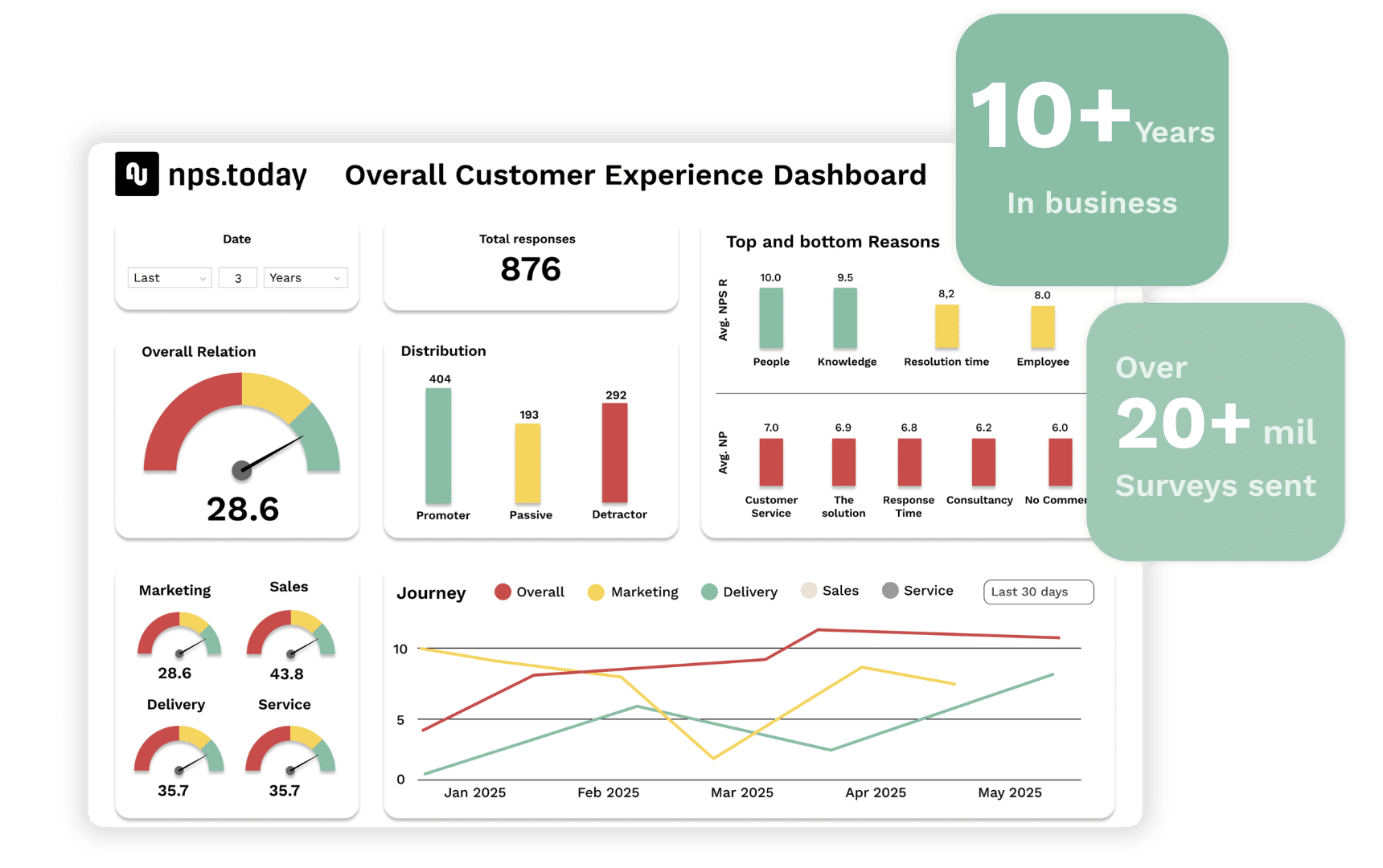
SMS or rcs
When to Use SMS or RCS for the Best Customer Experience
For decades, SMS has been the backbone of business messaging, providing a reliable and direct way to communicate with customers. With an open rate of 98% and the ability to reach nearly every mobile phone in the world, SMS remains an essential tool for businesses looking to engage their audience efficiently.
Now, the messaging experience is evolving. Rich Communication Services (RCS) Business Messaging takes customer engagement to the next level, enabling brands to deliver interactive, visually rich, and branded experiences — all within the native messaging app.
RCS is not a replacement for SMS, but an evolution for it – one that enhances the messaging experience with multimedia, interactive elements, and real-time engagement tracking. Here we will explore how RCS is transforming business communication, why SMS remains essential, and how businesses can strategically use both to maximize customer engagement.

The Continued Strenght of SMS in Business Communication
Despite the emergence of new technologies, SMS continues to be a cornerstone in business communication due to its unparalleled reliability and reach. Unlike email, which can get lost in spam folders, or app-based messaging, which requires downloads and internet connectivity, SMS delivers messages instantly, regardless of the device or network. This ubiquity ensures that businesses can effectively reach their audience without barriers.
One of the most compelling advantages of SMS is its exceptional open rate. SMS messages boast a 98% open rate, with most messages being read within minutes of receipt. This immediacy makes SMS an ideal channel for time-sensitive communications, such as flash sales, urgent updates, or appointment reminders.
Businesses across industries rely on SMS for:
- Notifications & Alerts
- Marketing & Promotions
- Customer Service
- Security & Authentication
The continued strength of SMS in business communication lies in its reliability, immediacy, and simplicity. These attributes still make it a valuable tool for businesses aiming to maintain effective and efficient communication with their audience.
The Emergence of RCS as an Evolution Not a Replacement
What is RCS?
RCS is the evolution of SMS, enhancing business communication with rich, interactive features similar to apps like WhatsApp and Messenger. Unlike SMS, RCS supports branded content directly in the customer’s native messaging app – no third-party downloads needed.
As of October 28, 2024, Apple’s iOS 18.1 update includes support for RCS Business Messaging (RBM), allowing businesses to engage iPhone users with the same dynamic messaging experience available on Android.
This expansion enables industries using LINK Mobility to reach a broader audience across both iOS and Android, scaling RCS Business Messaging just like SMS.
What makes RCS Different?
If SMS is the reliable workhorse of business messaging, RCS is the sleek, modern upgrade that takes customer interactions to the next level.
Imagine receiving a package delivery message not as simple text, but as branded experience complete with an interactive tracking map, quick-reply buttons for rescheduling, and even a chatbot for instant customer support – that’s the power of RCS.
Unlike SMS, which is text-based, RCS enables businesses to send rich, visually engaging messages that create more interactive and immersive experiences.
Here’s what makes RCS stand out:
- Engaging Rich Media: Share high-resolution, images, videos, GIFs, and interactive carousels to capture attention. For instance, an airline can send a scannable QR code for a boarding pass alongside real-time flight updates.
- Seamless Interactivity: Enhance customer engagement with quick reply options, suggested actions, and clickable buttons. Users can effortlessly book appointments, browse product catalogues, or initiate live chats – all within the message.
- Branded Experience: Unlike SMS, RCS enables businesses to incorporate logos, brand colors, and verified sender information, fostering trust and ensuring customers recognize who they’re engaging with.
The result? A richer, more dynamic customer experience that drives engagement, conversions, and customer satisfaction.
When to Use SMS or RCS for Maximum Impact
RCS is a major upgrade, but SMS remains essential. Rather than competing, they complement each other. The choice depends on the use case – RCS enhances engagement, while SMS ensures universal reach and simplicity.
Here’s how they compare:
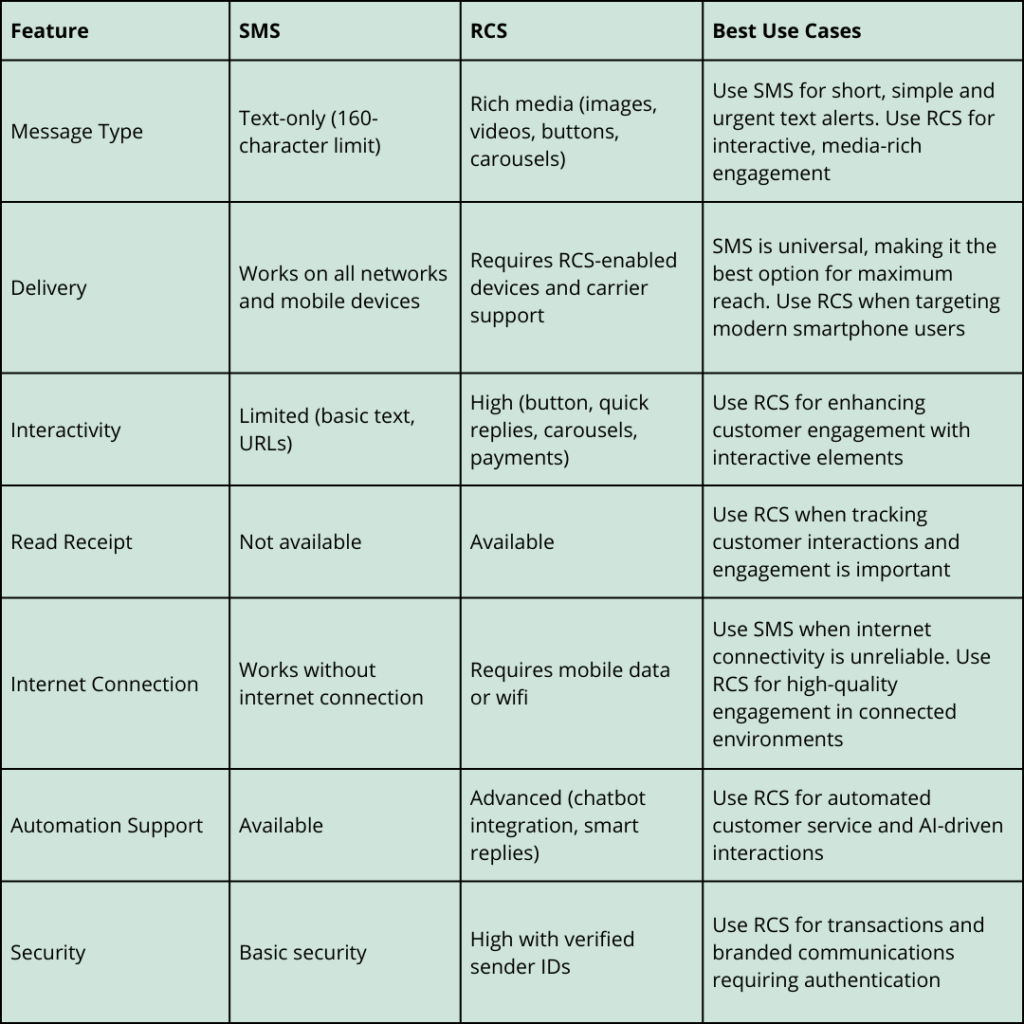
Choosing Between SMS & RCS for Your Use Case
SMS is universal, reliable, and works without internet, making it ideal for time-sensitive messages like OTPs, security alerts, and emergency notifications. Businesses needing broad, instant reach should use SMS.
RCS enhances engagement with rich media, interactive buttons, and read receipts, making it ideal for marketing, customer support automation, and transactional updates. While SMS is secure, RCS adds encryption and verified sender IDs, making it a safer choice for industries handling sensitive information and data, such as banking and healthcare.
SMS integrates seamlessly with CRM systems for simple notifications, while RCS enables AI-driven automation and omnichannel interactions. For mass reach and critical updates, SMS is essential, while RCS offers a more engaging and secure experience.
When to Use SMS:
- If you need universal reach, especially for customers using older phones or networks, as SMS guarantees 100% delivery to any mobile device
- If the message is time-sensitive and needs instant delivery, like OTPs or critical alerts
- If the content is simple and doesn’t require rich media or interaction
- If RCS delivery fails, SMS can serve as a reliable fallback to ensure the message reaches the recipient
When to use RCS:
- If you want to create an interactive experience with visuals, branding, and engagement options
- If your audience consists of users with RCS-enabled devices and internet access
- If you need real-time engagement tracking and analytics for optimization
Businesses should assess their audience, message purpose, and the level of interaction required before choosing between the two. By understanding the strengths of each channel, companies can deliver the best possible customer experience, ensuring their communication is both effective and engaging.
SMS or RCS? Unlock New Opportunities for Customer Experience
To illustrate the impact of RCS, let’s look at nps.today, a company specializing in customer experience solutions.
nps.today helps businesses measure and improve customer loyalty using customer experience solutions. Their solutions enable companies to measure, understand, and act on customer feedback through automated surveys integrated into existing business systems.
They currently use SMS to send surveys which has been highly successful, however, they have an opportunity to take it even further with RCS. By adopting RCS, nps.today can make surveys more interactive and engaging, leading to higher response rates, improved customer experience, and more valuable customer insights.
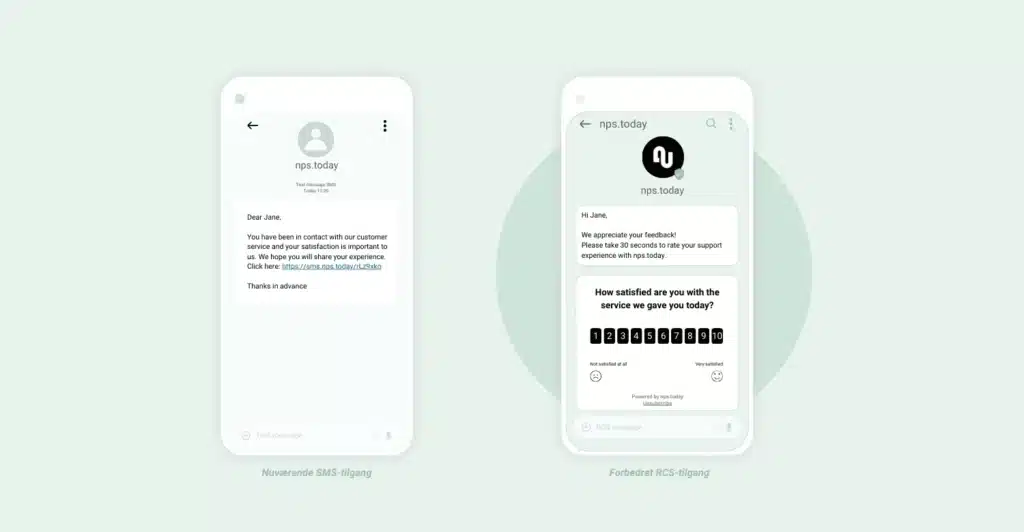
Exploring the Future of RCS Business Messaging
Discover how RCS Business Messaging is revolutionizing customer communication. With rich media, interactive features, and enhanced security, RCS takes messaging beyond SMS, creating more engaging and dynamic customer experiences. Explore the future of business messaging in our latest blog: RCS Business Messaging – It’s a Whole New World.
The Role of SMS and RCS in the Future of Messaging
As RCS adoption grows worldwide, businesses have the opportunity to enhance customer communication like never before. While SMS remains essential for its universal reach and reliability, RCS adds a new layer of engagement with rich, interactive experiences.
To stay ahead, businesses should:
- Leverage SMS for broad and instant communication
- Use RCS to drive deeper engagement where supported
- Optimize campaigns with real-time insights
- Educate customers to accelerate RCS adoption
The future of messaging isn’t about choosing one over the other – it’s about leveraging SMS and RCS as two distinct tools that meet different business communication needs, working together to create the best customer experience possible.
Ready to explore RCS Business Messaging? Start transforming your customer communication today!
SMS and RCS for Customer Experience
Reach customers where feedback is easiest to give
SMS and RCS can make customer feedback faster, more visible and more engaging. See how nps.today helps you send NPS, CSAT and CES surveys through the right channels — from reliable SMS surveys to richer customer interactions with RCS, email, apps, QR codes and more.
- Send customer surveys by SMS, email, apps, QR codes and more
- Use the right channel for each customer journey touchpoint
- Turn mobile feedback into insights, follow-up and CX improvement